

A place to drink beer, buy cigarettes, play a round of bowling or just socialize
By Stefan Yablonski
Hewitt Union was part of the college expansion in the late 1960s early 1970s that also included the dorms of the west side of campus.
Named in memory of Jesse Merle Hewitt (1898-1918), Oswego’s first student to die in World War I. He was just 20 years old and had worked in the Industrial Arts Department. Hewitt Union was opened in 1967.
It housed pretty much every aspect of student life on campus.
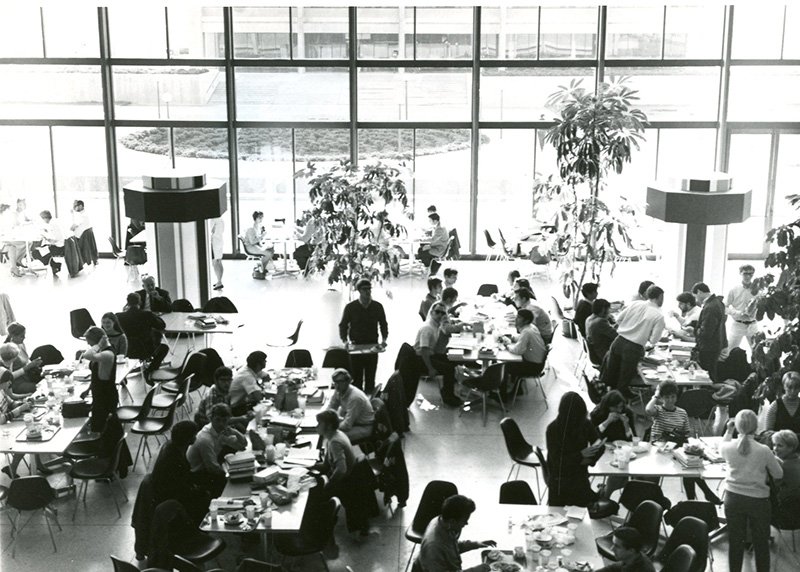
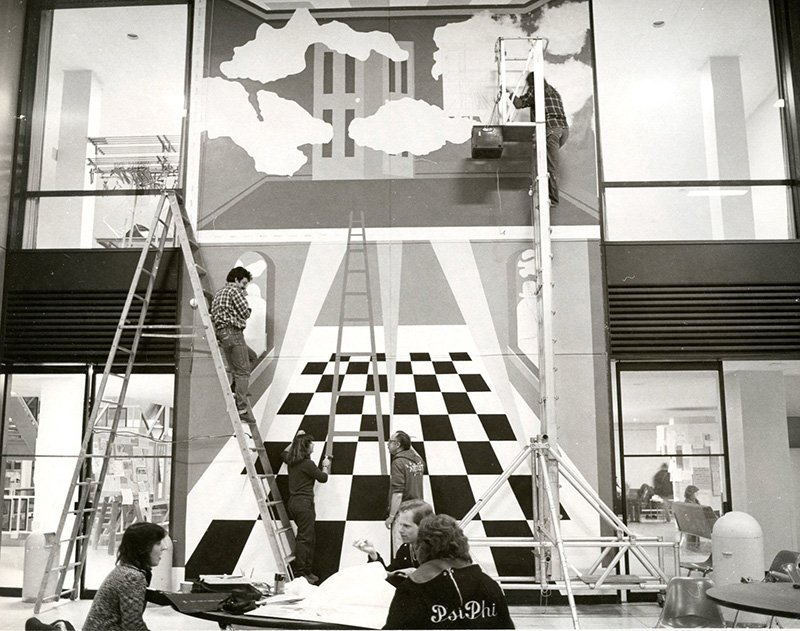 The main floor had a wide-open area where students could sit and talk or study. Off to one side was the snack area the led into a huge dining area where students could enjoy their food and feed quarters into a juke box that played the tunes of the day. Many of the tables were claimed by fraternities and sororities. Suspended from the ceiling in the center of the room was a gigantic mobile — the sun and the nine planets orbiting it.
On the opposite side of the building was the large ballroom where students could watch movies, have dances and hear lectures from some celebrities of the day.
The Tavern in the lower level of Hewitt Union now only exists in the memories of Laker grads. However, mementoes such as the glass mug from the early 1970s remain. The Tavern was always crowded during its heyday. Back then, the legal drinking age was just 18. It employed students as bartenders, waitresses and security.
Mark Wahl created the tavern out of what was originally used by the college as a post office. Wahl is a local singer-songwriter, guitarist and luthier. “I hired students to help,” he said. (He ultimately married one of those students, Ellen Stengle, who later founded the Ontario Center for Performing Arts.)
The bowling alley was in the rec center in the lower level of the union on the opposite end from the tavern. It offered a variety of pinball and other games, pool tables, air hockey and other activities.
The sweet shop was on the west end of the main floor. Patrons could grab some sweets, a variety of nuts as well as an assortment of newspapers, magazines and tobacco products.
Both sites employed students.
The campus information center on the first floor also employed students who assisted fellow students with bus schedules and more.
The second floor housed rooms for student government, study rooms, small meeting rooms, the offices of the student newspaper The Oswegonian and more. At the east end was a large restaurant where faculty and students could go to take a break from the dining halls and enjoy a good meal. The dining halls had some good meals, too. I recall going back for seconds for Cooper dining hall’s London broil.