

Driving around the streets of Oswego represents a veritable history lesson of the United States in general, New York state and Oswego in particular
By Tom and Jerry Caraccioli
Unlike Irish rock-n-roll band U2’s wish of a utopian environment where streets have no names, most small towns and big cities revel in the names of the famous and not so famous, roadways that define where they live.
When one thinks of street names, some of the world’s biggest cities come to mind including Broadway and Wall Street (New York City), Rodeo Drive and Hollywood Boulevard (Los Angeles), the Champs-Elysee (Paris), Abbey Road (London) and La Rambla (Barcelona).
Other street names like Main Street, Bridge Street, First, Second, Third and more are more common. Streets named after United States presidents, as well as local notables are also prevalent in cities, towns and villages, big and small.
Unbeknownst to some residents, driving around the streets of Oswego represents a veritable history lesson of the United States in general, New York state and Oswego in particular.
The Port City has its share of notable street names which honor well-known and famous people who have seemingly been long forgotten except in the books of American history.
Many reflect the city’s origin and history which have a connection to the pre-Revolutionary War shores of the city.
Long before Europeans settled on the shores of Lake Ontario, derived from the Haudenosaunee word kanadario, which means “sparkling water,” the five tribes of the Iroquois (Haudenosaunee) Nation — Seneca, Oneida, Cayuga, Onondaga and Mohawk — occupied the land Central New Yorkers call home. Today, four streets in the city of Oswego notably honor that Indigenous heritage.
The Port City also has obligatory and recognizable streets named after U.S. presidents, including George Washington, Abraham Lincoln, Martin Van Buren, Dwight Eisenhower and John F. Kennedy, as well as some of America’s famous Founding Fathers Benjamin Franklin, Alexander Hamilton and Philip Schuyler. Unceremoniously forgotten, which deserves to be rectified with a street named in her honor, is that of Oswego resident Dr. Mary Walker, the only female recipient of the United States Congressional Medal of Honor.
Other street names dotting the westside landscape honor people like Montcalm and Bronson, while streets like Church and Bunner are a part of Oswego’s eastside. All carry a rich story of some of the late-18th and early-19th century’s most notable statesmen and stateswomen.
Here are some of the notable streets and the story behind them:
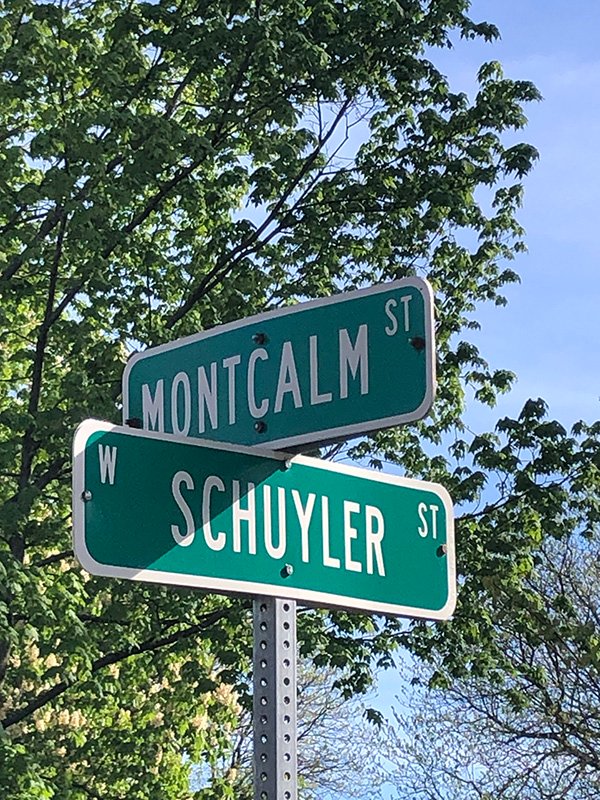 Montcalm Street/Park
Louis-Joseph de Montcalm (1712-1759) was the French Lieutenant General and Commander-in-Chief of the North American French forces during the French and Indian War. He led the siege and destruction of the British-held Fort Oswego prior to the American Revolutionary War.
Bronson Street
Alvin Bronson was a noted shipbuilder during the War of 1812 and later became Oswego Town Supervisor and a New York State Senator.
Schuyler Street
In 1775, Philip Schuyler was named a New York delegate of the Second Continental Congress. During the Revolutionary War, Schuyler became a noted Major General serving closely under the guidance of George Washington. Schuyler’s connections to Oswego ran deeper following the war and are noted in the previously-mentioned eastside neighborhood bearing street names Hamilton, Church and Bunner.
Because of recent popular culture and the renewed interest in the Founding Fathers as a result of the Broadway show phenomenon, “Hamilton,” the name Schuyler has attained revived prestige. This renewed interest has direct connections to the Port City.
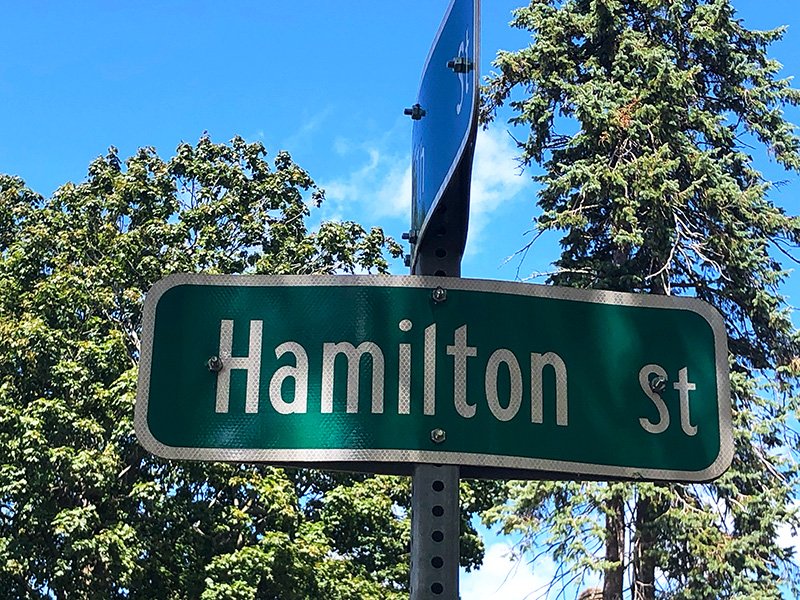 Hamilton Street/Park/Homes
The Oswego street, park and housing complex are named after Founding Father and the country’s first Secretary of Treasury Alexander Hamilton, who owned the eastside parcel of land before his death where these “landmarks” exist today. Further connections to Hamilton and Schuyler, whose middle daughter Elizabeth was married to Hamilton, also connect the Oswego streets of Church and Bunner.
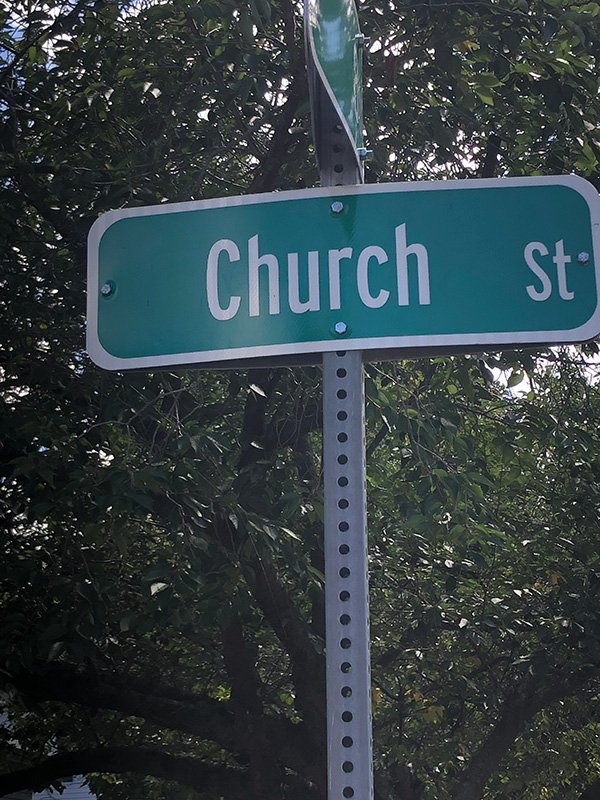 Church Street
Church Street was named after John Barker Church and his wife Angelica Schuyler Church, eldest daughter of Philip Schuyler and sister-in-law to Alexander Hamilton. John Barker Church also owned land on the eastside of Oswego, but his wife Angelica is probably more well-known today because of the Ron Chernow book and Broadway show highlighting parts of her life through Hamilton.
Bunner Street
While Bunner Street had a dubious reputation once upon a time in Oswego, the history of the name again connects with the Founding Fathers (Hamilton and Philip Schuyler) and Founding Mothers (Angelica Schuyler Church). Angelica Schuyler Church’s daughter Elizabeth, named after her aunt and wife of Hamilton, married Rudolph Bunner. The pair made their way west from Albany and settled in Oswego where Bunner would eventually found the Oswego Daily Palladium newspaper, precursor to today’s The Palladium-Times. The Bunners lived the rest of their lives in Oswego and are buried in Riverside Cemetery.
Though it certainly would not be considered utopia, especially these days where the area is annually noted for snowfall and mass accumulation during the winter months, the rich history of Oswego and the surrounding area will not be forgotten by those who live here. City planners made sure of it when they named the streets which represent the stories of the earliest origins of the country, state, city and founders that helped build America 250 years ago.
Tom and Jerry Caraccioli are freelance writers from Oswego, who have co-authored three books, mostly about hockey: They also host a monthly television and multi-platform segment on WSYR-Channel 9 (ABC) — “Backroads to Bridge Street with Tom & Jerry.”