

By Stefan Yablonski
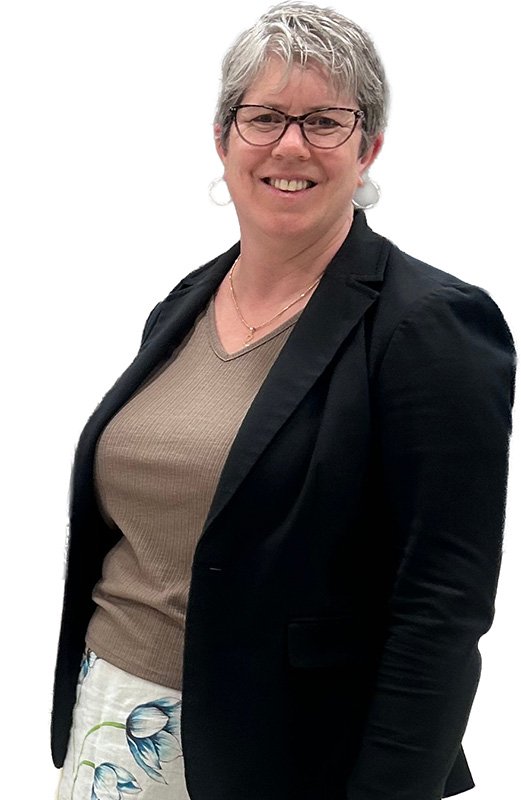
It’s not your grandparents’ library. Penfield Library is at the heart of teaching and learning at SUNY Oswego, according to Sarah Weisman, library director.
I have a smart phone — why do I need a library?
“A phone doesn’t have all the information and it’s certainly not all for free. Libraries have all types of special collections. We have a lot of materials that are not digitized. That is true for the printed word all over the world,” Weisman said. “High quality information is not free. It has value. Not everything is on the internet and not everything is free. What we have here at the Penfield Library — we have collections that support the print curriculum for students, faculty and staff at SUNY Oswego as well as their recreational reading.”
Penfield is the interdisciplinary heart of the campus, connecting people and research from every subject area with each other and the world, she added. It ties to the local, regional, national and global communities and places SUNY Oswego in a network of learning, sharing and support.
Here are some numbers, according to the library’s 2024-25 report:
• 97,911 news articles were accessed via the library’s New York Times digital subscription, by 1,125 students, faculty and staff.
• The library loaned 12,136 physical items (books, CDs, cameras and more).
• There were 591 library laptop checkouts.
• And $13,305 worth of textbooks placed on Course Reserve at the library were borrowed by students, for free, 985 times.
Outside of the Course Reserves, the most borrowed book of the year was “Off The Books” — a novel by SUNY Oswego’s own Soma Mei Sheng Frazier, associate professor, creative writing.
“We have print books; not all books are available in electronic format either and if they are, they may not be free. They’re often not free,” Weisman said. “Nowadays we have many fewer magazine subscriptions. Students aren’t reading print magazines for the most part. We still maintain some.
“We have more online offerings; there are more online students. We are changing to support the different modes of delivery today of the curriculum. Students want to access things on their phone, on an electronic format.”
Libraries used to be “book warehouses.”
“Students had to talk to a librarian to learn how to use the card catalog; research was a lot harder than it is now,” she said. “And it was completely print—based. We are not anymore — we are much more.”
Today’s Penfield Library has areas for yoga (the Harmony Room), classrooms, a place to unwind and play board games or listen to music, study carrels (semester and daily private study areas) — and the Lake Effect Café, she added.
Libraries are absolutely gathering places for students, according to Weisman. “We have social places, relaxation places. There are places where students in any program can come and feel a sense of belonging. We encourage that sense of belonging,” she said. “We want to show our students how welcome they are and everyone is welcome here.
“Libraries are places for students to come together with each other, with faculty and staff. They can have quiet study. They can have group study and libraries also have resources to support their work, tutoring services, resource help services. Students also have access to materials they don’t have to buy. We do have some textbooks on reserve. We have computers that they can use. We offer computers for check out, semester-length checkouts or week-long checkouts. We have a podcasting studio [there is one in Hewitt Hall for the broadcasting program] that is open to everybody, you don’t have to be a part of the program.”
Fewer computers
There seemed to be a computer in just about every room.
“We have a lot of computers in the building, yes,” Weisman said. “Actually, we have fewer computers now then we used to. We are seeing a lot of students come with their own computer. More and more students have laptops. They still need to use computers. Fewer students are coming without computers. There is a need for computing on campus. We are able to adjust the number of computers to match the demand.”
A couple of years ago, the library had a disability awareness display.
“One of our perspective students saw that exhibit during a tour and talked to our staff — talked about how included and welcomed she had felt,” Weisman said. “She has been a wonderful champion of the library, comes to all our events. She shared with us how wonderful that made her feel. We do this intentionally because we want students to come here, want them to feel comfortable here.”
Archives and Special Collections
The College Archives was established to preserve, maintain and foster an appreciation of the history and enduring value of SUNY Oswego. The Archives is comprised of historical records and documents of administrators, departments, faculty, staff and students. Special Collections’ local history collection includes material that focuses on the historical, political and cultural heritage of Oswego County or the surrounding Central New York region. This collection also includes items of genealogical significance, such as city directories and histories of local villages, towns and cities in Oswego County. Special Collections manuscript collection contains records, documents, correspondences, business papers, etc. of individuals, organizations or of a specialized topic.
The future
“I definitely see print collection continuing to be a bit smaller. Library faculty will be even more important, especially in his age of A I. Everything is on your phone, easy to find, you don’t need librarians any more — not true,” Weisman said. “High quality information is hard to find. The phone makes it seem like it is easy to find. You’ll still have a need for librarians.
“With all the AI slop, the role of librarians is more important than ever. They can help you wade through the false information, help you evaluate information, evaluate citations and see what’s real. We can also steer students to high quality resources.”
At Penfield, students have access to equipment that they might not otherwise have access to — film editing equipment, large format scanner, across campus or at the right time. Penfield is open a lot of hours, so students have a place to come after other places are closed.
Students have access to many services, equipment supports and “knowledge creation” with the Zines. (For more information, ask a librarian.)
Faculty research sharing events are held twice a semester. Faculty members come and talk about their research. The sessions are open to students, faculty and staff as well as the community.
Lida Scovil Penfield at a Glance
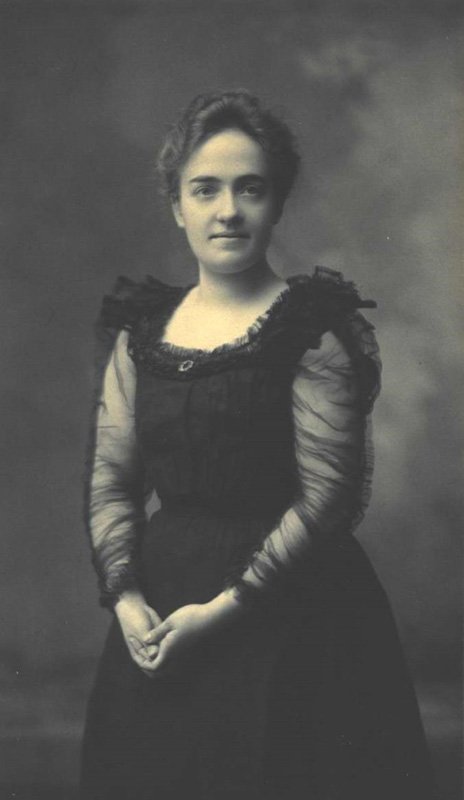
Penfield Library at SUNY Oswego is named after Lida Scovil Penfield (1873–1956). She was born in Oswego on Jan. 28, 1873, to Joel Benedict Penfield and Cynthia Adelaide (Taft) Penfield.
She lived in Scranton, Pennsylvania, before teaching at the Oswego Normal School — now SUNY Oswego— in 1914. During the summer sessions in 1917 and 1918, she taught English at the School of Education in Cleveland, Ohio, and at the School of Education at Miami University in Oxford, Ohio.
In 1932, Penfield became the chair of the English department at the Oswego Normal School. She was the first president of the Oswego branch of the American Association of University Women.
She was a long-time chair of the college’s English Department, a noted authority on local history and the author of “Stories of Old Oswego.” She also helped inaugurate the college’s traditional Torchlight Ceremony in 1936. The ceremony continues to this day. She wrote the message of the torch, a symbol of learning, to pass from alumni to graduating seniors to current students. Today, the Torchlight Ceremony is celebrated the evening before spring commencement and in the fall semester to welcome new students.
“Stories of Oswego” was written for children of the Oswego Normal School. In it, Penfield wrote about Native Americans and the first European settlers in Oswego, the history of Fort Ontario and how the starch industry made Oswego famous.
Penfield also wrote for the Oswego County Historical Society about James Fenimore Cooper’s time in Oswego during the War of 1812.
The library was a part of the Academic Commons built from 1961-1969. It was part of a massive construction project that included Mahar Hall, Lanigan Hall, Culkin Hall and Tyler Hall. Penfield Library was opened in 1968.
SUNY Oswego’s first campus library was housed in Rich Hall. The building is now home to the college’s School of Business.